Existing Patients
(813) 908-8100
New Patients
(813) 474-7201


LANAP® — Laser Assisted New Attachment Procedure — is a refined, laser-driven alternative to conventional periodontal surgery designed to treat moderate to advanced gum disease. Rather than relying on large incisions and sutures, LANAP® uses targeted laser energy to remove diseased tissue and bacterial biofilm from periodontal pockets while preserving healthy gum tissue. For many patients, this translates into less discomfort during and after treatment, reduced bleeding, and a more conservative approach to managing tissue around the teeth.
What sets LANAP® apart is its focus on tissue preservation and regeneration. The technique promotes the reattachment of connective tissue to the root surface and supports conditions that may encourage bone regeneration, rather than simply eliminating infection. This difference can be especially important for patients who want to maintain their natural teeth and avoid more invasive options whenever possible.
This approach is rooted in evidence-based periodontal care and performed with precise instrumentation designed specifically for laser-assisted periodontal therapy. While no single therapy is a perfect fit for every case, LANAP® has become an important option in contemporary periodontal treatment plans because of its combination of efficacy, minimally invasive technique, and favorable patient experience.
The PerioLase® MVP-7TM laser used in LANAP® procedures emits a specific wavelength that is absorbed preferentially by diseased and inflamed tissue and the bacteria that inhabit periodontal pockets. This selective absorption allows clinicians to remove infected tissue and reduce bacterial load while leaving adjacent healthy gum tissue intact. The precision of the laser reduces collateral damage, which helps maintain gum contour and minimizes the risk of recession commonly associated with traditional flap surgery.
In addition to vaporizing diseased tissue, the laser’s action creates an environment that supports better healing. It seals small blood vessels and can reduce postoperative bleeding, and the heat generated helps to decontaminate areas that are otherwise difficult to access with mechanical instruments alone. These effects work together to optimize conditions for tissue reattachment to the root surface and for the stabilization of the periodontal pocket.
It’s important to note that LANAP® is not simply a standalone laser treatment; it is part of a comprehensive periodontal protocol. Laser therapy is combined with careful mechanical debridement, diagnostic assessment, and individualized periodontal maintenance to achieve the best possible outcomes across a range of clinical presentations.
Before a LANAP® procedure, your dentist or periodontist will conduct a thorough periodontal evaluation that includes probing depths, radiographic assessment, and discussion of medical history and treatment goals. This assessment ensures the care plan is tailored to your needs and helps set realistic expectations about outcomes and follow-up care. Candidates for LANAP® typically include patients with persistent pocketing, bleeding on probing, or radiographic evidence of bone loss who prefer less invasive options.
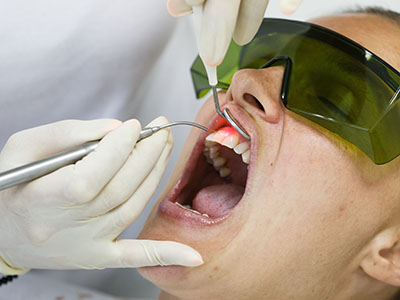
On the day of treatment, the process is typically performed under local anesthesia to ensure comfort. The clinician accesses the periodontal pocket and applies the PerioLase® laser to remove infected tissue and reduce bacteria, followed by careful cleaning of the root surfaces. Because the procedure is minimally invasive, sutures are often not required and patients frequently report less swelling and discomfort than they would expect from conventional surgery.
After treatment, the healing process emphasizes gentle care and regular follow-up. Patients will receive instructions for oral hygiene and may be placed on a periodontal maintenance schedule to monitor pocket depths and tissue response. While healing timelines vary, many patients appreciate that recovery from LANAP® is typically quicker and less disruptive to daily life compared with traditional surgical alternatives.
LANAP® is particularly valuable for patients who want to preserve gingival tissue and avoid visible gum recession. By focusing on targeted removal of diseased tissue and allowing healthy tissue to remain, LANAP® helps maintain the natural architecture of the gums and supports a more esthetic outcome. It’s also an important option for patients who may be concerned about postoperative discomfort or prolonged downtime.
Candidates for LANAP® include adults with chronic periodontitis who have not responded adequately to conventional non-surgical therapy or those who prefer a minimally invasive surgical option. Certain systemic health conditions can complicate periodontal disease, and the decision to use LANAP® will always consider overall health, smoking status, and the ability to adhere to a maintenance program. A comprehensive consultation will determine whether LANAP® is the most appropriate course based on clinical findings and long-term treatment objectives.
Beyond patient comfort, LANAP® can contribute to long-term tooth retention by reducing pocket depths and controlling infection in areas that threaten tooth-supporting structures. For teeth with an unfavorable prognosis under traditional protocols, LANAP® sometimes offers a realistic alternative that supports preservation rather than extraction.
When evaluating practices for LANAP®, consider a team that blends technical proficiency with a patient-centered approach. The effective use of laser-assisted periodontal therapy requires specific training and experience with both the PerioLase® device and the clinical protocol that supports optimal healing. Look for a practice that provides thorough diagnostics, clear explanations of recommended treatment, and a structured maintenance plan to protect long-term results.
At our office, we emphasize careful assessment and individualized planning so that LANAP® is integrated into a broader periodontal strategy tailored to each patient’s needs. Our approach prioritizes minimally invasive techniques whenever clinically appropriate, while maintaining rigor in infection control, monitoring, and ongoing periodontal care. Patients from Tampa and surrounding communities choose this method because it advances tissue preservation without compromising thorough disease control.
Ultimately, the success of LANAP® depends on accurate diagnosis, precise execution, and diligent post-treatment care. Choosing a practice that communicates clearly, documents clinical findings, and commits to long-term maintenance helps ensure the best possible outcomes for periodontal health.
In summary, LANAP® offers a modern, tissue-preserving alternative for managing periodontal disease that balances efficacy with patient comfort. If you’d like to learn whether this approach is right for you, please contact us for more information and to schedule a consultation.
LANAP® stands for Laser Assisted New Attachment Procedure and is a laser-driven approach to treating moderate to advanced gum disease. Instead of large incisions and extensive suturing, the protocol uses a specialized laser to selectively remove diseased tissue and bacterial biofilm from periodontal pockets while preserving healthy gum tissue. The procedure emphasizes tissue preservation and the potential for connective tissue reattachment and bone stabilization rather than only removing infected tissue.
Because LANAP® focuses on minimally invasive removal of disease and on creating conditions favorable to healing, many patients experience less postoperative discomfort, reduced bleeding, and faster initial recovery compared with traditional flap surgery. The treatment is performed as part of a defined clinical protocol that combines laser therapy with careful mechanical cleaning and ongoing periodontal maintenance to support long-term results.
The PerioLase® MVP-7 laser used in LANAP® emits a wavelength that is preferentially absorbed by inflamed tissue and pigmented bacteria within periodontal pockets. This selective absorption allows clinicians to remove infected tissue and reduce bacterial load while minimizing collateral damage to adjacent healthy gingiva. The laser energy also coagulates small blood vessels, which reduces bleeding and helps maintain the natural gum contour.
Beyond tissue removal, the laser creates a decontaminated environment that supports healing and tissue reattachment to the root surface. The thermal and bactericidal effects of the laser complement mechanical debridement, improving access to difficult-to-reach areas and optimizing conditions for regeneration when combined with appropriate clinical technique and follow-up care.
Good candidates for LANAP® are adults with chronic periodontitis who have persistent pocketing, bleeding on probing, or radiographic evidence of bone loss that has not fully responded to non-surgical therapy. The protocol may be appropriate for patients seeking a less invasive surgical option that prioritizes tissue preservation and reduced postoperative morbidity. Clinicians will also consider systemic health, smoking status, oral hygiene habits, and the ability to adhere to a structured maintenance schedule when determining candidacy.
A thorough periodontal evaluation that includes probing depths, radiographs, and medical history is required to determine whether LANAP® is suitable. In some cases LANAP® is combined with other restorative or periodontal therapies as part of a staged treatment plan; a customized assessment ensures the procedure aligns with long-term treatment objectives and overall oral health goals.
Before treatment, you will have a comprehensive periodontal assessment including probing, radiographic imaging, and a medical history review to develop a personalized plan. On the day of the procedure local anesthesia is typically used to ensure comfort while the clinician applies the PerioLase® laser to remove diseased tissue and reduce bacterial burden, followed by careful root surface cleaning. Because LANAP® is minimally invasive, sutures are often not required and the procedure can be shorter and less disruptive than traditional flap surgery.
After the procedure, clinicians provide specific post-operative instructions that emphasize gentle oral hygiene, short-term diet modifications, and symptom management as needed. Follow-up visits monitor pocket depths and tissue response, and patients are usually placed on a periodontal maintenance schedule to preserve gains in pocket reduction and to detect any recurrent disease early. At Arevalo Dental Studio we focus on clear communication and individualized follow-up to support predictable healing and long-term periodontal stability.
Primary clinical benefits of LANAP® include targeted removal of diseased tissue, preservation of healthy gingiva, reduced postoperative discomfort, and a potential for connective tissue reattachment and bone stabilization. The technique often results in less visible recession and a more favorable esthetic outcome compared with more aggressive flap surgeries, and it can contribute to long-term tooth retention when combined with proper maintenance. The laser’s bactericidal effects and ability to seal small blood vessels also support a more comfortable early recovery.
Limitations include the fact that LANAP® is not appropriate for every periodontal presentation and outcomes depend on accurate diagnosis, operator training, and patient compliance with maintenance. Some cases may still require conventional surgery or adjunctive procedures, and predictable long-term success requires ongoing periodontal care and risk factor management. A candid consultation helps determine whether LANAP® is the best option for a given clinical situation.
Recovery after LANAP® is generally quicker and less uncomfortable than after traditional flap surgery, with many patients reporting minimal swelling and manageable sensitivity in the first several days. Most individuals can return to routine activities within a day or two, although complete tissue healing and maturation of attachments occur over weeks to months. The exact timeline varies with the extent of disease, individual healing response, and adherence to post-operative instructions.
Aftercare typically includes gentle oral hygiene, prescribed or recommended antimicrobial rinses if indicated, and avoidance of strenuous activity for a short period. Regular periodontal maintenance appointments are essential to monitor pocket depths and tissue health, and clinicians may recommend adjunctive therapies or reinforcement of home care techniques to support long-term outcomes.
Common, generally mild side effects after LANAP® can include transient sensitivity, slight bleeding, and minor swelling, which usually resolve within days to a few weeks. As with any surgical or semi-surgical procedure, there is a risk that pockets will not fully resolve and additional treatment may be necessary to control disease in certain areas. Rare complications can include delayed healing or the need for further intervention if disease persists.
Careful case selection, adherence to the LANAP® protocol, and appropriate post-operative monitoring reduce the likelihood of adverse outcomes. Open communication with your clinician about medical history, medications, and smoking status helps identify and mitigate risk factors that can affect healing and long-term success.
LANAP® is most effective when used as one component of a comprehensive periodontal treatment plan that includes accurate diagnosis, mechanical debridement, and structured maintenance. It can be used to stabilize periodontal conditions before restorative work or implant placement and is sometimes combined with regenerative techniques when clinically indicated. Coordinating periodontal care with restorative and prosthetic planning helps preserve tooth-supporting structures and optimizes functional and esthetic outcomes.
Long-term success often relies on interdisciplinary communication between the periodontist or treating dentist and other members of the dental team. Patients should expect a sequential approach in which disease control is established first, followed by restorative rehabilitation and ongoing monitoring to protect results over time.
When evaluating a practice for LANAP® treatment, look for objective indicators such as specific training with the PerioLase® system, documentation of clinical protocols, use of diagnostic tools like periodontal charting and radiographs, and a clear maintenance program. Experience with laser-assisted periodontal therapy and continuing education in periodontal techniques support consistent application of the LANAP® protocol. Ask about how the practice documents clinical findings and measures treatment outcomes to ensure an evidence-based approach.
A consultation should include a thorough examination, an explanation of the recommended protocol, and a discussion of alternative therapies so you can make an informed decision. Patients in the Tampa area can schedule an evaluation at our office located at 6546 Gunn Hwy, Tampa, FL 33625 to review diagnostics and determine whether LANAP® is an appropriate option based on clinical findings and long-term goals.
LANAP® contributes to long-term tooth retention by reducing periodontal pocket depths, lowering bacterial load, and creating a biologic environment that supports reattachment of connective tissue to the root surface. By selectively treating diseased tissue and encouraging stabilization of the periodontal environment, the protocol can help preserve the structures that support teeth and reduce the likelihood of tooth loss when used as part of a comprehensive care plan. The laser’s decontaminating effect can improve access to areas that are otherwise difficult to treat with mechanical instruments alone.
Durable results depend on accurate diagnosis, precise execution of the LANAP® protocol, and a disciplined maintenance program that includes regular professional cleanings and home care. Collaboration between the patient and the dental team over time is essential to monitor bone levels and pocket depths and to intervene early if disease activity recurs, thereby protecting natural dentition whenever possible.